

A tier 4 credit score sits in the 580–669 range on most lending scales, and it changes what you pay for nearly everything with interest attached. Lenders read this number fast, then price your risk. This guide breaks down what tier 4 actually means, what it costs in dollars, and the exact steps that move you out of it.
Key Takeaways
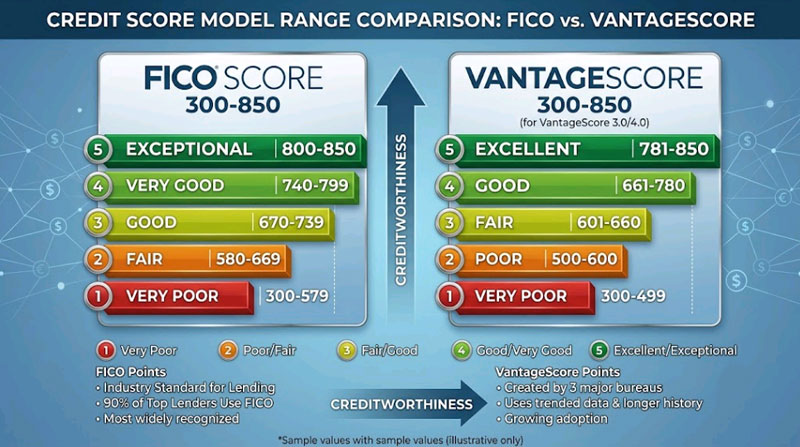
- Tier 4 generally means FICO 580–669 or VantageScore 601–660, labeled “Fair.”
- “Tier” language is an industry convention, not an official bureau term — auto lenders use it most.
- A tier 4 borrower can pay thousands more over a loan term than a tier 1 borrower.
- Payment history and utilization drive roughly 65% of your score. Fix those first.
- Legitimate paths exist — credit unions, secured cards, credit-builder loans — but payday and title loans should stay off the table.
Last updated: July 2026
What Is a Tier 4 Credit Score? (Quick Answer)
A tier 4 credit score is a fair-to-poor score, typically 580–669 on the FICO scale or 601–660 on VantageScore. It’s below the national average and signals higher risk to lenders — but it’s not a permanent label.
Here’s the part most articles skip: “tier 4” isn’t an official term from Experian, Equifax, or TransUnion. It’s a shorthand lenders invented, and it shifts by industry. Auto lenders often run six or more internal tiers. A credit card issuer’s “tier 4” won’t match a mortgage lender’s. So the number matters more than the label.
Tier 4 in FICO vs. VantageScore vs. Auto Lending
| Model | Tier 4 Range | Official Label | Where You’ll See It |
|---|---|---|---|
| FICO | 580–669 | Fair | Credit cards, personal loans |
| VantageScore | 601–660 | Fair | Free monitoring apps, prequalification |
| Auto lender tiers | Varies by lender | Subprime/near-prime | Auto financing specifically |
For context, the average FICO score in the U.S. sat around 715 in 2025 — solidly in the “Good” range. That gap matters when you’re comparing offers.
Why Your Score Landed in Tier 4
Skip the vague “financial hardship” explanation. Here’s what actually pulls a score into this range:
- Late or missed payments — even one 30-day delinquency stings
- High utilization — carrying balances above 50% of your limits
- Thin credit file — too few accounts or too short a history
- Stacked hard inquiries — several credit applications in a short window
- Collections or charge-offs on your report
One update worth knowing: paid medical collections were removed from credit reports as part of recent bureau policy changes, and unpaid medical debt under $500 is generally excluded too. If medical debt pushed your score down, check your report — it may already be cleaner than you think.
check your credit report for free
What a Tier 4 Score Actually Costs You
This is the part that rarely gets quantified. A lower tier doesn’t just mean “worse terms” — it means a specific dollar gap.
Interest Rate Reality Check
| Product | Tier 1 (Excellent) | Tier 4 (Fair) | Approx. Cost Gap |
|---|---|---|---|
| Personal loan (3-yr, $10k) | ~8–10% APR | ~20–25% APR | $2,000–$3,000+ extra |
| Auto loan (60mo, $30k) | ~6% APR | ~14–18% APR | $4,000–$6,000+ extra |
| Credit card APR | ~18% | ~28–29% | Compounds fast on carried balances |
Rates shift with the market, so treat these as directional, not exact quotes. Still, the pattern holds every year: the tier 4 borrower pays materially more for the same loan.
Costs Beyond Lending
A fair credit score can also mean:
- Higher security deposits on apartments or utilities
- Lower approval odds on cell phone contracts without a deposit
- In some states, higher insurance premiums (this varies — a handful of states restrict credit-based insurance pricing, so check your local rules)
Loan Options That Actually Work With Tier 4 Credit
Safe, Legitimate Choices
- Credit union installment loans — often better terms than online lenders, but membership rules apply
- Secured credit cards — you post a deposit, use it responsibly, build history
- Credit-builder loans — the lender holds the funds while you make payments, then releases them
- Co-signed loans — useful, but the co-signer carries real risk if you default
Auto Financing at This Tier
Expect a higher APR than advertised rates, and be cautious with buy-here-pay-here dealerships. These often skip a credit check but charge steep fees and rarely report payments to the bureaus — so you pay more and build nothing.
High-Risk Options to Avoid
Payday and title loans target fair-credit borrowers hardest, and the math rarely works in your favor. A typical payday loan carries an APR well into the triple digits — often cited around 400% by consumer protection regulators. A $500 loan not repaid in two weeks can balloon into hundreds of dollars in fees alone.
Title loans carry similar risk, plus one more: miss payments and the lender can repossess your car.
| Loan Type | Typical APR | Builds Credit? | Risk Level |
|---|---|---|---|
| Credit union loan | 8–18% | Yes | Low |
| Secured credit card | 20–25% | Yes | Low |
| Payday loan | ~400% | No | Severe |
| Title loan | 200%+ | No | Severe |
How to Move From Tier 4 to Tier 3
Step 1: Fix Payment History First
This is the single highest-impact lever. Set autopay for at least the minimum due, and time it to land right after payday to avoid overdrafts. Already behind? Call your creditor and ask about a hardship plan or goodwill adjustment before it hits collections.
Step 2: Cut Utilization Below 30%
Below 10% is even better if you can manage it. One trick competitors skip: pay your balance down before the statement closing date, not just the due date — that’s the number reported to the bureaus.
Step 3: Dispute Errors
Pull your reports and check for mistakes. Roughly one in five consumers finds an error on at least one report. Dispute directly with the bureau reporting it.
Step 4: Space Out Hard Inquiries
Rate-shopping for a mortgage or auto loan within a 14–45 day window (the exact window depends on the scoring model) typically counts as one inquiry, not several. Applying for random new credit cards outside that window does real damage.
Realistic Timeline
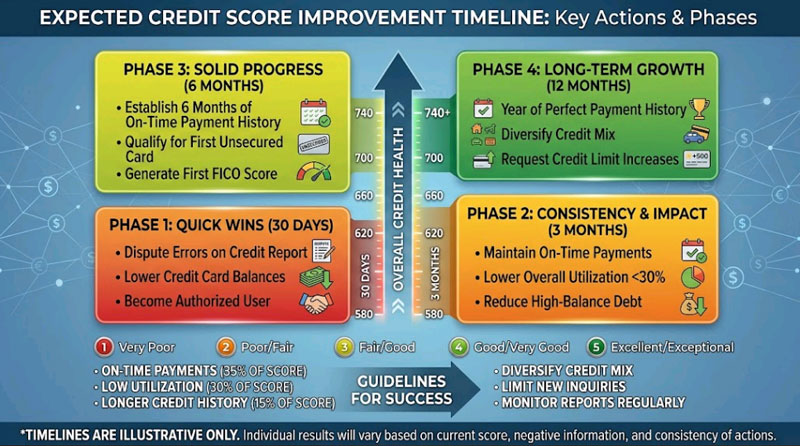
- 30 days: Errors corrected, utilization dropped — small movement possible
- 3 months: Consistent on-time payments start showing
- 6 months: Meaningful score gains if utilization and payment history both improve
- 12 months: Enough history to realistically cross into “Good” territory
Should You Hire a Credit Repair Company?
Legitimate credit repair companies can dispute inaccurate items on your behalf — that’s it. Under the Credit Repair Organizations Act, no company can legally remove accurate negative information, no matter what they promise. If a company guarantees a specific score increase or asks for payment before doing any work, that’s a red flag.
Most disputes are things you can file yourself, for free, directly with the bureau.
Tier 4 Credit Score FAQs
Can I buy a house with a tier 4 credit score?
Yes, though options narrow. FHA loans allow scores as low as 580 with 3.5% down, sometimes lower with a bigger down payment. Expect a higher rate than a prime borrower.
Can I get a credit card with a tier 4 credit score?
Yes — secured cards and some fair-credit unsecured cards are built for this range. Approval odds are decent; rewards and limits will be modest.
Does checking my own credit score lower it?
No. Checking your own score is a soft inquiry and has zero impact. Only hard inquiries from lenders affect your score.
Is tier 4 the same as subprime?
Close, but not identical. “Subprime” usually starts below 620–670 depending on the lender, overlapping with the lower end of tier 4.
Will paying off a collection account raise my score right away?
Sometimes, sometimes not. Older scoring models still count paid collections; newer ones (VantageScore 4.0, FICO 9+) ignore them. Impact depends on which model your lender uses.
Your Next Steps
A tier 4 score is a snapshot, not a sentence. Fix payment history, cut utilization, dispute errors, and space out applications — that combination moves most people up within a year. Start with a free credit report check, then work the plan above one step at a time.
Disclaimer: This article is for informational purposes only and does not constitute financial, investment, or legal advice. Credit scoring models, rates, and regulations change over time and vary by lender and state. Consult a licensed financial advisor or credit counselor for guidance specific to your situation.