

Saving money sounds simple — until life gets in the way. Rising grocery bills, stubborn subscription fees, and tempting one-click checkouts make it harder than ever to hold onto your paycheck. Yet according to a 2025 Bankrate survey, 57% of Americans can’t cover a $1,000 emergency expense from savings alone.
The good news? You don’t need a dramatic lifestyle overhaul. Small, strategic shifts — compounded over months — can quietly transform your finances. This guide gives you 35 actionable, expert-backed ways to save money in 2026, with real numbers, pro tips, and a clear plan to get started today.

Key Takeaways
- Start with a budget system — even a rough one cuts overspending by an average of 15–20%.
- Automate savings before you have a chance to spend; treat it like a non-negotiable bill.
- Attack high-interest debt first — every dollar of credit card interest eliminated is a guaranteed “return.”
- Audit subscriptions annually — the average American wastes $348/year on unused subscriptions (C+R Research, 2024).
- Stack strategies — combining even 5–6 tips from this list can free up $3,000–$5,000 annually for most households.
Part 1: Build a Money System That Works on Autopilot
1. Create a Budget That Actually Fits Your Life
Forget one-size-fits-all rules. The classic 50/30/20 budget (50% needs, 30% wants, 20% savings/debt) is a useful starting framework, but it breaks for people in high cost-of-living cities or those managing irregular income.
Pro Tip: Try a zero-based budget if 50/30/20 feels too loose. Every dollar gets a “job” each month — savings, bills, fun — and you account for every cent. Apps like YNAB (You Need A Budget) are built around this method.
Try NerdWallet’s free budget template, or simply open a spreadsheet and list your monthly income against every known expense.
2. Set S.M.A.R.T. Savings Goals
Vague goals fail. “Save more money” is not a goal — “Save $4,800 in 12 months by setting aside $400/month” is.
Use the S.M.A.R.T. framework: Specific, Measurable, Achievable, Relevant, Time-bound. Whether you’re targeting an emergency fund (3–6 months of expenses), a vacation, or a down payment, write the number down and work backward to a monthly figure.
Pro Tip: Split big goals into sub-goals. Seeing your emergency fund hit $1,000, then $2,000, provides dopamine hits that keep you motivated.
3. Track Every Dollar — at Least for 30 Days
You cannot manage what you don’t measure. A 30-day spending audit is often the most eye-opening financial exercise people do.
Use a free app like Copilot, Monarch Money, or the NerdWallet app to pull all transactions into one view. Most people discover 2–3 surprise spending categories they had no idea were this high.
4. Move Savings to a High-Yield Savings Account (HYSA)
As of early 2026, the best HYSAs are offering 4.5%–5.1% APY — dramatically more than the national average savings account rate of just 0.41% (FDIC, 2025). On a $10,000 emergency fund, that’s the difference between earning $41/year vs. $510/year.
Top-rated options include Ally, Marcus by Goldman Sachs, SoFi, and Discover Bank. All are FDIC-insured and have no monthly fees.
Pro Tip: Use “buckets” or sub-accounts within your HYSA to earmark money for specific goals — emergency fund, vacation, car repair — without mixing funds.
5. Automate Everything
“Pay yourself first” is a cliché because it works. Set up an automatic transfer to your HYSA on payday, before the money touches your checking account.
Even automating $50/week adds up to $2,600/year — and most people don’t miss it once it’s out of sight.
Part 2: Eliminate Debt to Free Up Cash Flow
6. Prioritize High-Interest Debt with the Avalanche Method
High-interest debt — especially credit cards averaging 21.5% APR in 2025 (Federal Reserve) — is a savings killer. Every month you carry a balance, you’re paying a steep “tax” on past spending.
The debt avalanche method: List debts from highest to lowest interest rate. Pay minimums on all, then throw every extra dollar at the highest-rate debt. This saves the most money in total interest paid.
Pro Tip: Use a free debt payoff calculator (like Undebt.it) to see your exact payoff date and total interest savings. Seeing the number makes the sacrifice feel worth it.
7. Renegotiate or Refinance Student Loans
If you’re on a standard 10-year federal repayment plan but struggling, income-driven repayment (IDR) plans like SAVE or IBR can lower monthly payments significantly. Payments are capped at 5–10% of discretionary income.
For private loans, refinancing when rates drop can shave 1–2% off your rate — meaningful savings over a 10–20 year term.
8. Refinance Your Mortgage When Rates Drop
A 1% rate reduction on a $350,000 mortgage saves roughly $2,300/year in interest. With rate forecasts still in flux heading into 2026, keep a close eye on the Fed’s moves.
Break-even on refinancing costs (usually $3,000–$6,000) typically happens within 2–3 years if you plan to stay in the home.
Part 3: Slash Monthly Bills Without Sacrificing Quality of Life
9. Master Grocery Shopping with a System
Groceries are one of the highest-variable expenses in any budget. A few habits can cut your bill by 20–30%:
- Shop with a list tied to a weekly meal plan (reduces impulse buys)
- Shop at discount grocers like Aldi, Lidl, or Grocery Outlet for pantry staples
- Use cashback apps like Ibotta, Fetch Rewards, or Rakuten for additional savings
- Buy store-brand products — typically 25–30% cheaper than name-brand equivalents
Pro Tip: Shop the perimeter of the grocery store first (produce, proteins, dairy) — the processed and higher-margin items live in the middle aisles.
10. Lower Your Internet and TV Bills
Call your internet provider annually and ask for a retention deal. If they won’t budge, mention you’re considering a competitor. This works more often than not.
Cable cord-cutting continues to accelerate: 25% of U.S. households are now cable-free (Leichtman Research, 2024). Streaming bundles (Disney+/Hulu/ESPN, for example) often cost less than $30/month combined vs. $100+ for cable.
Pro Tip: Use a service like BillShark or Trim to negotiate bills on your behalf for a percentage of the savings.
11. Switch to an MVNO Cell Phone Plan
Major carrier customers often pay $60–$100+/month. MVNO (Mobile Virtual Network Operator) carriers — Mint Mobile, Visible, Tello, US Mobile — run on the same towers for a fraction of the price.
Mint Mobile’s annual plans start around $15/month. That’s a potential savings of $600–$1,000/year with zero reduction in coverage quality.
12. Reduce Your Electric Bill with Smart Scheduling
The U.S. Department of Energy confirms that adjusting your thermostat 7–10 degrees for 8 hours per day saves up to 10% annually on heating/cooling costs.
Other quick wins:
- Switch to LED bulbs (use 75% less energy than incandescents)
- Unplug “vampire” electronics (TVs, game consoles, chargers drain power on standby)
- Run dishwashers and laundry during off-peak hours if your utility offers time-of-use rates
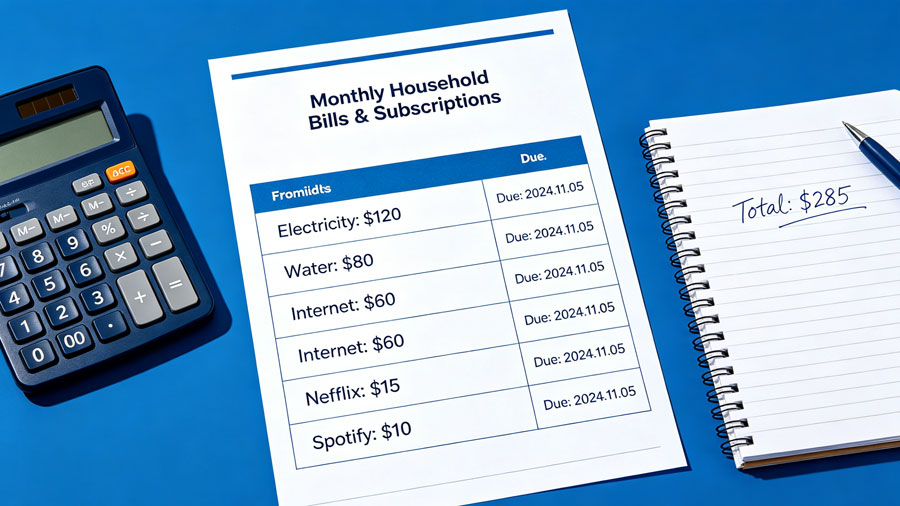
13. Run an Annual Subscription Audit
The average American spends $219/month on subscriptions (Forbes, 2024) — but only uses about half of them regularly. A one-hour audit can easily free up $50–$100/month.
Steps:
- Pull your credit card and bank statements for the past 3 months
- Highlight every recurring charge
- Sort into: “Use regularly,” “Use occasionally,” “Haven’t used in 60+ days”
- Cancel the third category immediately
Pro Tip: Use Rocket Money or Trim to automatically identify and cancel subscriptions for you.
Part 4: Save More Every Time You Shop
14. Time Major Purchases Strategically
Retailers follow predictable sale cycles:
- TVs → Super Bowl weekend, Black Friday
- Appliances → September/October (new model year)
- Cars → End of month, end of quarter, December
- Winter clothing → January–February clearance
- Outdoor furniture → August–September
Pro Tip: Install the Camelizer browser extension (for Amazon price history) and Capital One Shopping or Honey (for automatic coupon codes) to never overpay online.
15. Use the 48-Hour Rule for Impulse Purchases
The original “30-day rule” is valuable, but for most purchases, 48 hours is enough cooling-off time. Add the item to your cart or a wishlist and walk away. If you still want it two days later — and it fits your budget — buy it.
Research from the Journal of Consumer Psychology confirms that a brief delay significantly reduces impulse buying regret.
16. Create Friction in Your Online Shopping Experience
Remove saved credit card info from browsers and shopping apps. Delete your Apple Pay or Google Pay shortcuts. Require yourself to go find the physical card.
This extra 60 seconds of friction reduces purchase completion rates by up to 40% (Baymard Institute, 2024) — friction that benefits your wallet.
17. Buy in Bulk Strategically
Not everything is worth buying in bulk — only non-perishables and products with a long shelf life. Good candidates: paper goods, cleaning supplies, canned food, protein powder, laundry detergent.
Costco and Sam’s Club memberships pay for themselves quickly if you have the storage space and buy the right categories.
18. Embrace Secondhand Shopping
The secondhand market is booming. ThredUp’s 2024 Resale Report projects the global secondhand apparel market will reach $350 billion by 2027.
For clothes: ThredUp, Poshmark, Depop, local consignment shops. For furniture and household goods: Facebook Marketplace, Craigslist, OfferUp, local Buy Nothing groups.
Pro Tip: Buy Nothing groups on Facebook are completely free — neighbors give away items they no longer need. It’s one of the most underused money-saving tools available.
Part 5: Cut Transportation Costs
19. Shop Your Car Insurance Every Year
Car insurance rates vary by up to 54% across insurers for identical coverage (NerdWallet, 2025). Set a calendar reminder to compare quotes annually using tools like The Zebra, Insurify, or your insurer’s competitor’s website.
20. Refinance Your Auto Loan
If you bought your car when rates were high, refinancing now could lower your monthly payment. Even a 2% rate reduction on a $20,000 loan saves roughly $400 over the life of the loan.
21. Use Gas Apps and Warehouse Fuel
Use GasBuddy or Waze to find the cheapest fuel nearby. Costco and Sam’s Club gas stations consistently beat retail prices by $0.10–$0.30/gallon — significant if you fill up weekly.
22. Explore Car-Sharing Instead of Owning a Second Car
If you’re a two-car household but one car sits mostly parked, run the numbers. Between car payments, insurance, registration, maintenance, and fuel, the average car costs $12,182/year to own (AAA, 2024).
Turo, Zipcar, or Getaround could replace occasional-use vehicles at a fraction of that cost.
Part 6: Spend Less on Food and Entertainment
23. Meal Plan to Minimize Food Waste
The average American household wastes $1,500 worth of food annually (USDA, 2024). A weekly meal plan tied to your grocery list is the single most effective fix.
Plan 5 dinners, leave 2 nights flexible, and build lunch from dinner leftovers.
24. Cut Meal Delivery Apps Significantly
Food delivery platforms (DoorDash, Uber Eats, Grubhub) add 20–40% in fees, tips, and surge pricing on top of already restaurant-priced food. If you’re ordering 4x/month, you could be spending $200+ just on delivery overhead.
Try cutting to once per week. Redirect the rest to savings.
25. Find Free and Low-Cost Entertainment
Free entertainment is everywhere — it just requires a little research:
- National Park Service Free Days (6 per year in 2026)
- Museum free days (most major museums have them)
- Library cards — free streaming (Kanopy, Hoopla), e-books, audiobooks, magazines
- Community calendars on Eventbrite and local Facebook groups
- National parks with America the Beautiful Pass ($80/year, unlimited entry)
26. Bring Your Own Everything to Events
Venue pricing on food and beverages is typically 300–500% above retail. Pack snacks, a reusable water bottle, and coffee in a travel mug. At a 3-hour sporting event or concert, this habit easily saves $20–$40 per person.
Part 7: Little-Known Money-Saving Moves Most People Miss
27. Use Your FSA or HSA — Don’t Leave Money on the Table
If your employer offers a Flexible Spending Account (FSA) or Health Savings Account (HSA), you’re paying for healthcare with pre-tax dollars — an instant 22–37% discount depending on your tax bracket. HSA funds roll over indefinitely and can be invested for growth.
28. Negotiate Medical Bills
Hospital and clinic bills are almost always negotiable. Ask for an itemized bill, check for billing errors (studies show up to 80% of hospital bills contain mistakes), and ask about financial hardship programs. Many hospitals will discount bills by 20–50% if you ask.
29. Maximize Employer Benefits You’re Ignoring
Review your employee benefits package for:
- 401(k) employer match (free money — contribute at minimum to capture the full match)
- Tuition reimbursement
- Wellness stipends
- Employee discounts and perks programs
30. Cash In on Rewards Cards (If You Pay in Full)
If you already pay credit card balances in full each month, switching to a 2% flat-rate cash-back card (like Citi Double Cash or Fidelity Rewards Visa) earns hundreds per year with zero behavior change.
Warning: This only works if you never carry a balance. If you do, the interest will wipe out all rewards and then some.
31. Claim Every Tax Deduction and Credit You’re Owed
Millions of Americans overpay taxes by missing deductions. Key ones often overlooked:
- Student loan interest deduction
- Home office deduction (for self-employed)
- Child and Dependent Care Credit
- Earned Income Tax Credit
- Energy-efficient home improvement credits (up to $3,200 in 2026 under IRA provisions)
Use FreeTaxUSA or IRS Free File if your income qualifies.
32. Refinance or Remove PMI on Your Home
If your home has appreciated and your loan-to-value ratio is now below 80%, you may be able to cancel Private Mortgage Insurance (PMI) — which typically costs $100–$300/month. Contact your lender and request a new appraisal.
33. Use the Library as a Free Entertainment Hub
A public library card is arguably the highest-value free resource in America. Beyond books:
- Streaming: Kanopy and Hoopla (free movies, documentaries, TV)
- Digital magazines: Libby/OverDrive
- Online courses: LinkedIn Learning access at some libraries
- Museum and attraction passes (many library systems offer free passes)
- Seed libraries, tool libraries, and more at select branches
34. Sell What You Don’t Use
Decluttering and selling unused items on Facebook Marketplace, eBay, or Poshmark creates a one-time cash infusion. Many households have $500–$2,000 in sellable items they’ve simply never listed.
Pro Tip: Focus on electronics, clothing, baby gear, furniture, and sporting equipment — the highest-demand categories on resale platforms.
35. Get Help When the Budget Just Won’t Balance
If you’re budgeting carefully and still can’t save, consider:
- Government assistance programs: SNAP, LIHEAP (utility assistance), childcare subsidies
- 211.org: Free, confidential 24/7 resource connecting you with local social services
- Nonprofit credit counseling: NFCC-affiliated agencies offer free or low-cost debt management planning
- Community action agencies: Many offer emergency financial assistance regardless of income
Frequently Asked Questions (FAQ)
Financial planners generally recommend 3–6 months of essential living expenses. If you’re self-employed or have variable income, aim for 6–12 months. Start with $1,000 as a starter emergency fund while paying down high-interest debt, then build from there.
It depends on the interest rate. As a rule: if the debt’s interest rate exceeds what you’d earn in savings (roughly 5% in 2026), prioritize the debt. Always maintain a small starter emergency fund ($1,000) so you don’t have to go deeper into debt for unexpected expenses.
Three steps you can take right now: (1) Open a high-yield savings account, (2) Cancel one subscription you haven’t used in 30+ days, (3) Set up an automatic $25/week transfer. Small but immediate action beats perfect planning.
Frugality isn’t about deprivation — it’s about intentionality. The goal is to ruthlessly cut spending on things you don’t value so you can afford the things you do. Most people find that after 60–90 days of mindful spending, their priorities shift naturally.
Start with the highest-leverage moves: employer benefits (especially 401k match), government programs you may qualify for, and cutting variable expenses. Even saving $20/month builds the habit and the mindset that compounds over time.
Your Action Plan: Start This Week
You don’t have to implement all 35 strategies at once. Pick the three that feel most actionable and start there.
Beginner stack (Week 1):
- Open a HYSA
- Set up $50/week auto-transfer
- Cancel one unused subscription
Intermediate stack (Month 1):
- Run a full subscription audit
- Call your internet provider for a lower rate
- Meal plan for two weeks
Advanced stack (Month 2–3):
- Refinance auto loan or mortgage if rates support it
- Maximize 401(k) to capture full employer match
- Negotiate one medical or service bill
Small changes, consistently applied, are the engine of financial progress. Start today.
Disclaimer: The content on this site is for informational and educational purposes only and does not constitute financial, investment, legal, or tax advice. We are not licensed financial advisors. Always consult a qualified financial professional before making any financial decisions. Results may vary based on individual circumstances.