

Car loan mistakes rarely feel like mistakes in the moment. They feel like a low monthly payment, a fast approval, or a dealer doing you a favor. Then the math catches up. This guide breaks down the 13 errors that quietly cost buyers thousands, backed by real numbers instead of vague warnings.

How Much Do Car Loan Mistakes Actually Cost You?
Most car loan advice stays vague. “Shop around.” “Watch your terms.” Fine advice, no numbers attached.
Here’s a rougher, more honest picture. Stretch a $30,000 loan from 60 months to 84 months, and you can add well over $1,500 in extra interest, even before accounting for a higher rate on the longer term. Roll a $2,500 warranty into your loan instead of paying cash, and you’re financing that warranty at your car’s interest rate for years.
Small decisions compound. That’s the whole point of this article.
Do a Financial Self-Check Before You Shop for a Car Loan
Skip this step, and every car loan mistake below becomes more likely.
Can You Afford the Full Cost of Ownership, Not Just the Loan?
The loan payment is one line item. Insurance, fuel, maintenance, and registration sit right next to it. A $400 monthly payment on paper can turn into $650 once insurance premiums land — and premiums have climbed sharply over the past few years.
What’s Your Credit Score Right Now?
Your score sets your rate before you ever speak to a lender. Check it before you shop, not after you’ve fallen for a car.
How Much Can You Put Toward a Down Payment?
Even a modest down payment changes your negotiating position. It signals financial readiness and shrinks the loan balance you’re paying interest on.
Mistake #1: Skipping Pre-Approval and Settling for the First Offer
Walking into a dealership without pre-approval hands the dealer full control of your financing conversation.
Pre-Qualification vs. Pre-Approval: They’re Not the Same
Pre-qualification is a soft estimate. Pre-approval is a real, conditional commitment from a lender, based on a hard credit check and verified information. Only pre-approval gives you actual leverage at the dealership.
The Rate-Shopping Window Most Buyers Don’t Know About
Worried that applying to multiple lenders will tank your credit score? It won’t, if you do it right. Credit scoring models group multiple auto loan inquiries made within a short window — typically 14 to 45 days — and count them as a single inquiry. [credit scoring inquiry rules] Shop your rate within that window without fear.
Mistake #2: Focusing on Monthly Payment Instead of Total Cost
This is the single most common car loan mistake, and dealers know it well.
Real Numbers: 60-Month vs. 84-Month Loan
| Loan Term | Monthly Payment | Total Interest Paid |
|---|---|---|
| 60 months | ~$650 | ~$5,000 |
| 72 months | ~$560 | ~$7,000 |
| 84 months | ~$490 | ~$9,500 |
Illustrative example based on a $35,000 loan at a mid-range interest rate. Actual figures vary by lender and credit profile.
A lower monthly payment often masks a much larger total cost. Ask for the total repayment figure every time, not just the monthly number.
Mistake #3: Ignoring How Your Credit Score Shapes Your Rate
Lenders price risk. Your score is their main input.
Where Rates Typically Land by Credit Tier
Borrowers with excellent credit routinely land auto loan rates several percentage points below those with fair or poor credit. That gap on a $30,000 loan can mean thousands of dollars over the loan term. [auto loan interest rate data by credit score]
Quick Ways to Improve Your Score Before Applying
- Pay down credit card balances below 30% utilization
- Dispute any errors on your credit report
- Avoid opening new credit lines right before applying
- Make every payment on time for at least two to three months
Mistake #4: Skipping the Down Payment
Zero-down financing sounds appealing. It’s also how buyers end up owing more than the car is worth within the first year.
Why 20% Down Is the Industry Benchmark
A 20% down payment keeps you ahead of depreciation, which hits hardest in year one. It also shows the lender you’re financially prepared, which can influence your approved rate.
Mistake #5: Skipping GAP Insurance Without Understanding It
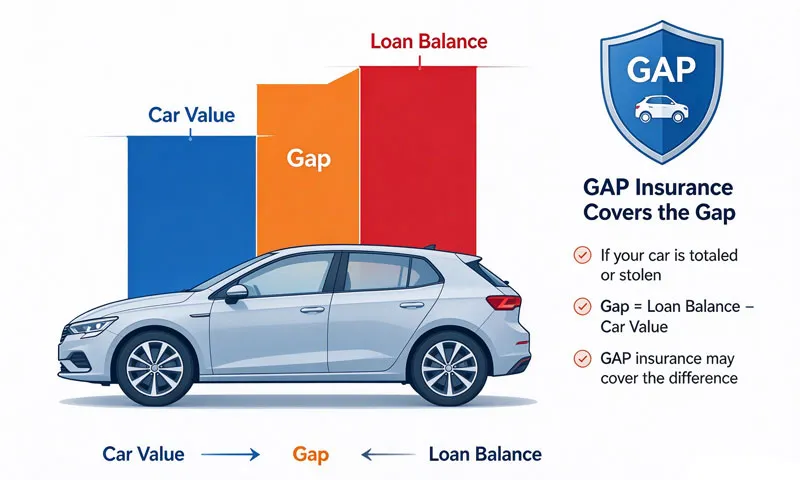
GAP insurance covers the difference between what you owe and what your totaled car is actually worth. Standard auto insurance won’t cover that gap.
Who Actually Needs It
- New car buyers with a small down payment
- Long loan terms (72+ months)
- Leases
- Anyone financing 100% of the purchase price
If you put down 20% or more and chose a shorter term, GAP insurance may add cost without much benefit. Run the numbers before buying it automatically.
Mistake #6: Choosing the Wrong Loan Term Length
Longer terms lower your payment and raise your total cost. There’s no way around that trade-off — only a decision about which one matters more to your situation.
If you plan to keep the car long-term and want breathing room in your budget, a longer term might be defensible. If you want to build equity fast and pay less overall, go shorter.
Mistake #7: Relying Solely on Dealer Financing
Dealer financing isn’t automatically bad. But dealers often mark up the rate a lender quotes them, sometimes by a full percentage point or more, and pocket the difference.
Bring your own pre-approval as a benchmark. Let the dealer beat it if they can.
Mistake #8: Financing Add-Ons and Taxes Into the Loan
Extended warranties, service contracts, and paint protection packages get pitched hard in the finance office. Roll a $2,000 add-on into a 60-month loan at a typical auto rate, and you’ll pay meaningfully more than $2,000 by the time it’s paid off.
Pay for add-ons in cash, or skip them and buy comparable coverage independently for less.
Mistake #9: Rolling Negative Equity Into a New Loan
Being “upside down” means you owe more than the car is worth. Roll that balance into a new loan, and you’re now paying interest on two cars — the one you traded and the one you’re driving.
Pay off the negative equity before or during your next purchase whenever possible. It’s not a fun check to write, but it’s cheaper than the alternative.
Mistake #10: Falling for Dealer Financing Scams
This is the part most car loan mistake guides skip entirely.
What “Yo-Yo Financing” Looks Like
You sign paperwork, drive the car home, and days later the dealer calls saying your financing “fell through” — asking you to sign a new contract at a higher rate. The Federal Trade Commission has issued specific consumer warnings about this practice and about “payment packing,” where extra products get quietly added to your contract. [yo-yo financing and payment packing warnings]
Your Rights If This Happens to You
If your financing is genuinely contingent, that should be spelled out in your contract. Read what you sign before you drive off the lot. If a dealer pressures you to sign new terms after the fact, you’re allowed to walk away and demand your trade-in or down payment back.
Mistake #11: Not Reading the Fine Print
Prepayment penalties, balloon payments, and default clauses on financed add-ons hide in contract language buyers skim past. Read every page. Ask about anything unclear before you sign, not after.
Mistake #12: Ignoring Your Specific Financial Situation
First-Time Buyers With No Credit History
Consider a co-signer or a credit-builder loan first. Lenders want to see some track record, even a short one.
Self-Employed Borrowers
Expect to provide tax returns and bank statements instead of pay stubs. Approval takes longer — plan ahead.
Buying After Bankruptcy
Rates will run higher for a period, but on-time payments on a new auto loan are one of the fastest ways to rebuild your score.
How credit scores affect loan approval
Mistake #13: Never Refinancing When You Qualify for a Better Rate
Rates drop. Scores improve. Most borrowers never revisit their original loan to check.
When Refinancing Actually Makes Sense
- Your rate has dropped by a full percentage point or more since you financed
- Your credit score has climbed by 50+ points
- You have enough term remaining to offset any refinancing fees
Car loan refinancing guide and calculator
Car Loan Mistakes at a Glance
| Mistake | Why It Costs You | Quick Fix |
|---|---|---|
| Skipping pre-approval | Dealer controls the rate | Get pre-approved first |
| Chasing low payments | Hides total interest cost | Ask for total repayment figure |
| Ignoring credit score | Sets your entire rate | Check and improve it early |
| No down payment | Immediate negative equity risk | Put down 10-20% minimum |
| Long loan terms | Interest cost balloons | Match term to your plan |
| Rolling in add-ons | You pay interest on extras | Pay add-ons in cash |
| Skipping fine print | Hidden fees and penalties | Read every clause |
Frequently Asked Questions
Does checking my credit score hurt it before applying for a car loan?
No. Checking your own score is a soft inquiry and doesn’t affect your credit. Only the lender’s hard inquiry during formal application counts.
Is dealer financing or a credit union better for a car loan?
Neither wins automatically. Compare your pre-approved rate against the dealer’s offer and take whichever is genuinely lower after fees.
How much should my car down payment be?
Most lenders and advisors recommend at least 10-20% of the purchase price to avoid immediate negative equity.
Can I refinance my car loan shortly after buying?
Yes, though many lenders prefer you wait a few months to establish payment history first. Refinancing makes sense once your rate or credit profile has meaningfully improved.
Is GAP insurance required by lenders?
Some lenders require it on leases or very low down payment loans. Otherwise, it’s optional and depends on your equity position.
Disclaimer: This article is for informational purposes only and does not constitute financial, legal, or investment advice. Loan terms, rates, and regulations vary by lender and jurisdiction. Consult a licensed financial advisor or credit professional before making borrowing decisions.