

Laundry savings start with knowing where your money actually goes. Most households burn cash on habits that feel efficient but aren’t — extra detergent, hot water, half-empty loads. This guide breaks down the real numbers behind your laundry bill and shows you exactly which changes move the needle, backed by federal energy data instead of guesswork.
How Much Does Laundry Really Cost You in 2026?
The average U.S. household spends between $180 and $240 a year on laundry supplies alone — detergent, softener, dryer sheets. That range shifts based on machine type, water heater setup, and how often you wash.
Energy Star household laundry cost data
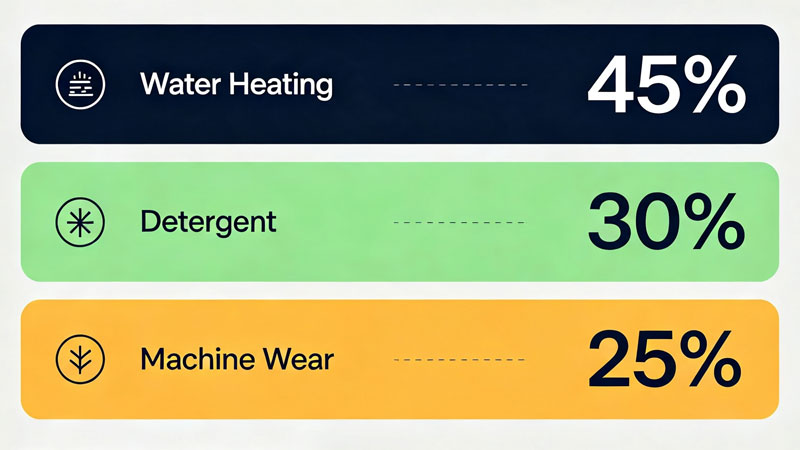
Water heating is the real budget killer. It accounts for roughly 90% of the energy a washing machine uses per cycle. Everything else — the motor, the spin, the drum — barely registers next to that number.
Laundromat vs. In-Home Washer: Which Costs Less?
This is the comparison nobody breaks down honestly. Here’s the real math.
| Factor | Laundromat | In-Home Washer |
|---|---|---|
| Cost per load | $3–$6 | $0.50–$1.50 |
| Upfront investment | $0 | $500–$1,200 |
| 3-year total cost (weekly laundry) | ~$780–$1,560 | ~$580–$900 |
| Best for | Renters, small households, infrequent laundry | Families, weekly laundry, long-term residents |
If you’re doing laundry more than twice a week, a home washer usually pays for itself within 18 months. If you’re washing occasionally, the laundromat wins — no maintenance, no repair bills.
7 Laundry Savings Habits Backed by Real Data
These aren’t tips pulled from a listicle. Each one ties to a specific cost driver.
Wash With Cold Water — Know the Exceptions
Cutting hot water from your routine is the single biggest lever you have. Since heating dominates energy use, switching to cold cuts your per-load energy cost by roughly half.
Exceptions matter here. Use hot water for anything post-illness, cloth diapers, or heavily soiled workout gear. Bacteria don’t die in cold water the way they do above 140°F.
Run Full Loads, Not Overstuffed Ones
A half-empty washer uses nearly the same water and power as a full one. That’s wasted capacity you’re paying for. But cramming clothes in backfires too — detergent can’t circulate, so you end up rewashing. Fill the drum about three-quarters full. That’s the sweet spot.
Measure Your Detergent — Don’t Eyeball It
detergent dosage and residue research
Most people use two to three times the detergent a load actually needs. Extra suds don’t mean extra clean — they mean more rinse cycles, more residue, and fabric that wears out faster.
Extend Your Spin Cycle
A longer spin pulls more water out before the dryer even starts. Less moisture going in means less time — and less money — spent drying. This one change alone can shave 15–20 minutes off a typical dry cycle.
Check Your Utility’s Off-Peak Hours
Electricity pricing isn’t flat. Most utility providers charge less between 9 p.m. and 7 a.m., and often all day on weekends. Call your provider or check their site — off-peak windows vary by region and season.
Skip Fabric Softener When You Can
Modern detergents already carry scent and anti-static agents. Softener adds a waxy buildup that can actually reduce a towel’s absorbency over time. A wool dryer ball does the same static-reduction job for free, reused hundreds of times.
Bring Your Own Supplies to the Laundromat
Vending machine detergent runs two to three times the retail price. A small travel container filled from your own bottle solves this permanently.
The Machine Matters More Than People Think
Your habits only go so far if the machine itself is inefficient. This is where most laundry savings guides stop short.
What Does Energy Star Certification Actually Save You?
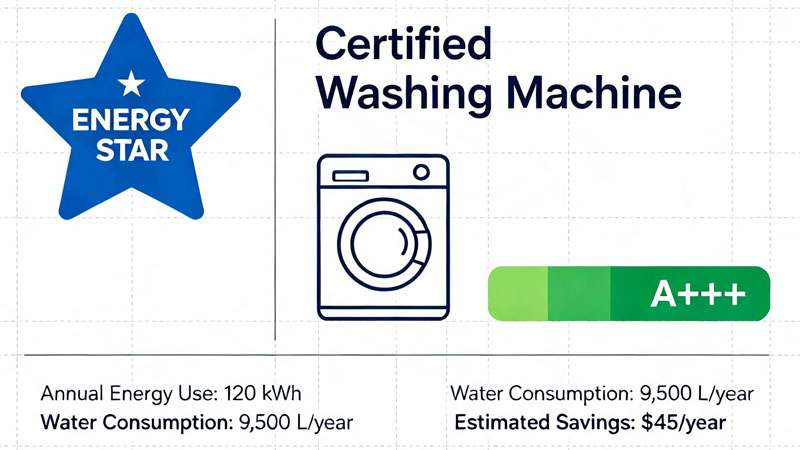
Energy Star-certified washers use about 25% less water and 25% less energy than standard models. Over a machine’s typical 10-year lifespan, that gap adds up to real money — not a rounding error.
Is a High-Efficiency Washer Worth the Higher Price?
HE washers cost more upfront, often $200–$400 more than a basic model. But they use less water per cycle and extract more moisture during spin, cutting dryer time too. Most households recover that price difference in energy savings within two to three years of regular use.
Warning Signs Your Machine Is Costing You Extra
- Longer cycle times than the manual states
- Clothes coming out still damp after a normal spin
- Unusual noise during agitation
- Lint trap filling faster than usual
Any of these point to reduced efficiency — and a higher bill for the same clean.
Common Laundry Mistakes That Quietly Drain Your Wallet
- Overusing detergent or softener. More product doesn’t mean cleaner clothes. It means buildup, residue, and shorter fabric life.
- Ignoring the lint trap. A clogged trap forces the dryer to work harder and run longer every single cycle.
- Never checking off-peak rates. Most people never call their utility provider to ask. That’s free money left on the table.
- Stretching hygiene-sensitive items too far. Underwear, workout gear, and anything worn against skin needs frequent washing regardless of cost-cutting goals. Bacteria buildup isn’t worth the savings.
how to maintain your washing machine for longer lifespan
Frequently Asked Questions
How much should I budget for laundry per month in 2026?
Plan for $15–$20 monthly on supplies alone if you’re washing at home weekly. Add $10–$15 more if you’re relying on a laundromat.
Is it cheaper to do laundry at home or at a laundromat long-term?
For weekly or more frequent laundry, home washing wins within about 18 months. For occasional use, a laundromat stays cheaper since there’s no equipment cost.
Do laundromat loyalty or prepaid cards actually save money?
Usually yes, but only by 5–10%. Check if the card locks you into one location before committing — the savings only matter if you’re a regular customer there.
Does cold water really clean as well as hot water?
For everyday loads, yes. Modern detergents are formulated for cold-water activation. Hot water is still better for sanitizing after illness or for heavily soiled fabric.
How much detergent do I actually need per load?
One tablespoon for a standard 8-pound load is typically enough. Check your detergent’s concentration level first — high-efficiency formulas need even less.
Disclaimer: This article is for informational purposes only and does not constitute financial, legal, or professional advice. Laundry costs vary by region, utility provider, and household use. Consult a licensed professional or your local utility provider for guidance specific to your situation.