

Indoor swimming pool cost figures online are stuck in 2019. Most articles quote a flat $200,000 and stop there, leaving out financing, insurance, and permits — the parts that actually decide whether this project makes sense for you. This guide breaks down real 2026 numbers, hidden fees, and how homeowners actually pay for it.
How Much Does an Indoor Swimming Pool Cost in 2026?
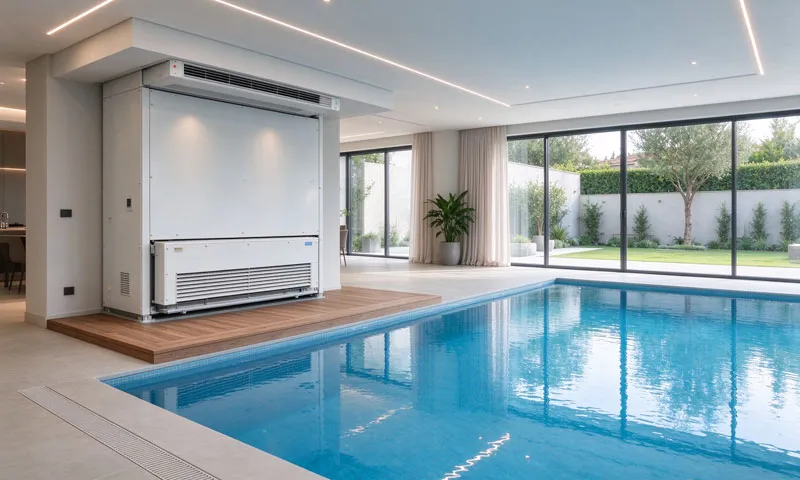
Expect a full in-ground indoor pool project to land between $180,000 and $260,000. That range moved up from the often-cited $200K figure most guides still use — labor and HVAC equipment costs have climbed since 2022, and dehumidification units alone now run higher than they did three years ago.
The Cost Breakdown Table
| Component | 2026 Cost Range | % of Total Budget |
|---|---|---|
| Pool shell (gunite/fiberglass/vinyl) | $45,000 – $95,000 | 30–35% |
| Structure/enclosure | $100–$140/sq ft | 35–40% |
| Dehumidification system | $22,000 – $34,000 | 10–14% |
| Pool heater | $1,800 – $10,000 | 3–5% |
| Ventilation & air exchange | $4,500 – $6,000 | 2–3% |
| Automatic pool cover | $13,000 – $24,000 | 5–8% |
Cost Per Square Foot: What Actually Moves the Number
Fiberglass shells run cheaper per square foot than gunite, but gunite holds up better long-term in high-humidity indoor environments. That trade-off matters more indoors than outdoors, because your shell never gets a break from moisture exposure — even a covered outdoor pool dries out between swims. An indoor shell doesn’t.
Labor is the other lever. A contractor in Phoenix and one in Boston aren’t pricing the same job. According to Adams Pool & Spa’s 2026 pricing guide, the same 15 x 30 ft base pool that costs roughly $50,000 in Phoenix or Tampa can climb to $80,000 in Chicago or Boston, with warm-climate markets typically coming in 20% to 30% cheaper because of lower labor rates and a longer build season.
Angi reports that Boston pool builders charge an average of $95 per hour for labor, and regional trade rates diverge even more sharply: electrician labor alone runs $120–$180 per hour in New York City versus $65–$95 in Texas or Florida, according to Pool Cost Estimator’s 2026 state comparison. Those figures are for standard outdoor pool work. An indoor project adds electrical, HVAC, and framing trades on top, so expect the regional spread on your final quote to be at least as wide.
The Hidden Costs Nobody Talks About
Permits and Building Code Compliance
You can’t just build a room around a hole full of water. Most municipalities require a separate mechanical permit for the HVAC and dehumidification system, on top of the standard pool permit. Skip this step and you risk a stop-work order mid-project — or worse, a failed inspection that forces you to tear out drywall.
Homeowners Insurance and Liability
Adding an indoor pool almost always triggers a call to your insurer. Expect your premium to increase, and expect the insurer to ask about fencing, door locks, and alarm systems around the pool room. Many homeowners also add an umbrella liability policy — usually $150 to $400 a year for an extra $1 million in coverage — because a pool is one of the top drivers of liability claims on residential property.
Long-Term Maintenance: What 10 Years Actually Costs
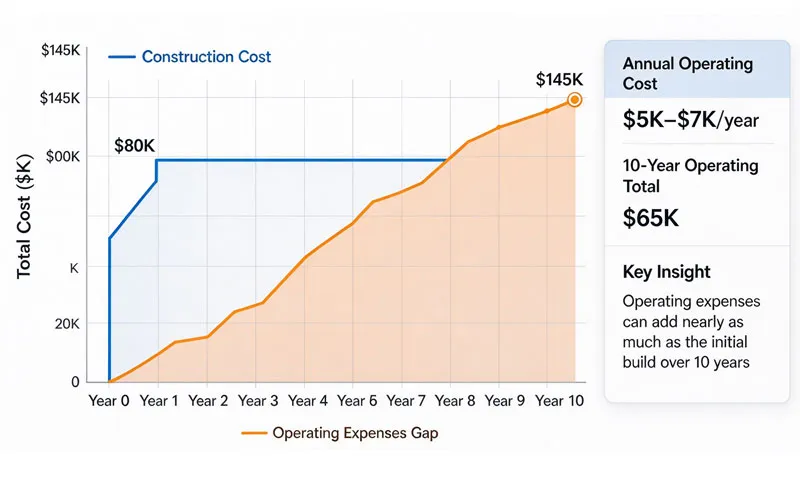
Annual upkeep for an indoor pool typically runs $3,500 to $6,000 — chemicals, electricity for heating and dehumidification, filter replacement, and the occasional resurfacing. Over 10 years, that’s $35,000 to $60,000 on top of your build cost. Nobody puts that number next to the $200K sticker price, but it’s the number that actually determines your total cost of ownership.
Indoor Pool vs. Outdoor Pool: The Real Cost Comparison
| Factor | Indoor Pool | Outdoor Pool |
|---|---|---|
| Upfront cost | $180K–$260K | $50K–$150K |
| Usable months/year | 12 | 4–6 |
| Annual maintenance | $3,500–$6,000 | $1,200–$2,500 |
| Insurance impact | Higher | Moderate |
| Privacy | High | Low–moderate |
Cost-Per-Use: The Number That Changes the Math
Run the numbers on cost per swim session, not just sticker price. A $220,000 indoor pool used 300 days a year over 15 years costs roughly $49 per swim day. An outdoor pool at $90,000, used 150 days a year over the same span, costs about $40 per day. The gap narrows fast once you factor in year-round use — and for anyone doing daily laps for fitness, indoor often wins on a per-use basis.
How to Finance an Indoor Swimming Pool
This is the part most pool blogs skip entirely, and it’s the part that actually determines whether you build.
Home Equity Loan vs. HELOC
A home equity loan gives you a fixed rate and a lump sum — useful when you have exact contractor quotes in hand. A HELOC gives you a revolving line, which fits better if your project has phases or you’re not sure of the final number yet. As of September 23, 2026, Bankrate’s national lender survey puts the average HELOC rate at 7.28% and the average home equity loan rate at 8.39%, the highest home equity loan rate seen so far this year.
Other trackers report slightly lower figures: Curinos data cited in early September showed a 7.16% HELOC average and 7.35% for fixed-rate home equity loans. In practice, expect quotes in the 7% to 8.5% range depending on your credit score, loan-to-value ratio, and lender. HELOC rates are variable and track the prime rate, while home equity loan rates are locked at closing. On a $150,000 draw, every percentage point of interest adds about $1,500 a year, so comparing at least three lenders matters. Rates change weekly, so confirm current figures before you apply.
Current home equity loan rates
Personal Loans and Pool-Specific Lenders
Unsecured personal loans close faster than home equity products but carry higher rates. Several lenders now offer pool-specific financing programs with terms built around this exact use case — worth comparing against a standard HELOC before signing anything.
Is the Interest Tax-Deductible?
Sometimes — if you use a home equity loan and the funds go toward “substantial home improvement,” the interest may qualify under current IRS rules. This isn’t guaranteed and depends on your total mortgage debt and filing situation. Talk to a licensed tax professional before assuming any deduction applies to your build.
Does an Indoor Pool Increase Resale Value?
A pool typically adds 5–8% to home value, according to appraisal industry estimates — but indoor pools are a narrower market. Fewer buyers want one, and fewer appraisers know how to value the enclosure properly. Don’t build expecting to recoup the full cost at resale. Build it because you’ll use it.
Pool resale value and home appraisal
Design Choices That Change Your Budget
Dehumidification Isn’t Optional
Keep humidity between 40% and 60%. Keep air temperature 2 to 5 degrees Fahrenheit above water temperature. Get this wrong and you’re not just uncomfortable — you’re looking at mold, corroded steel framing, and in bad cases, roof damage from years of moisture buildup. This is why professional design guidance treats a pool room as its own HVAC category rather than an ordinary living space. ASHRAE’s natatorium guidance calls for dehumidification that runs continuously, since evaporation from the water never stops.
It also recommends directing supply air across exterior walls and glazing to prevent condensation, and keeping the pool hall at slight negative pressure relative to the rest of the house so humid, chloramine-laden air doesn’t migrate into living areas. Ask any contractor you’re considering whether their design follows these principles, and have a licensed mechanical engineer review the HVAC plan before you sign. An undersized unit is the most expensive mistake in an indoor pool build.
Retractable Enclosures: The Middle Ground
A retractable roof costs more upfront than a fixed structure but cuts your dehumidification runtime — open the roof on a mild day and the system rests. Owners report meaningfully lower energy bills over time, though the payback period stretches past 10 years for most budgets.
Budget Alternatives Worth Considering
If $200K isn’t realistic, you still have options:
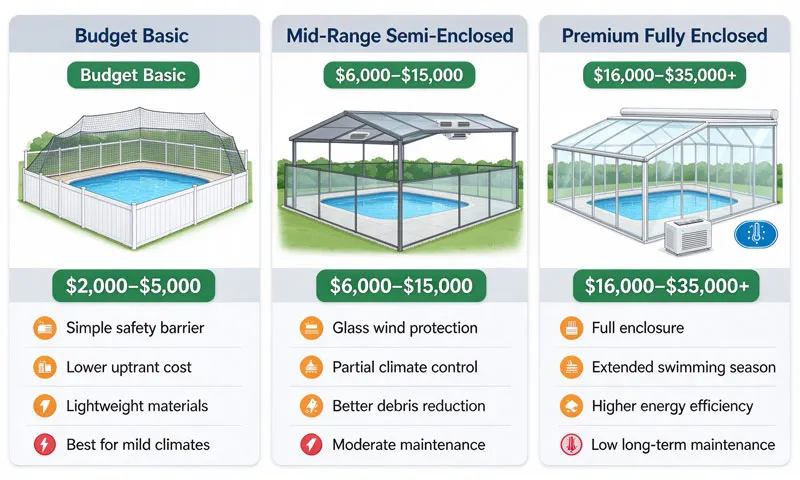
- Bubble/dome enclosure: $2,000–$5,000, covers an existing outdoor pool
- Screen enclosure: around $8,000, keeps out debris and bugs
- Retractable enclosure: $50,000–$150,000, full flexibility
- Compact exercise pool: $20,000–$30,000, ideal for fitness-only use
Who Should Actually Build One
Build indoor if you swim for fitness year-round, want privacy, or live somewhere with a short outdoor season. Skip it if pool parties and summer entertaining are the main draw — an outdoor pool does that job for a third of the cost.
Fiberglass vs gunite vs vinyl pools
FAQ: Indoor Swimming Pool Cost
How much does a small indoor pool cost?
A compact exercise or lap pool runs $20,000 to $40,000 installed, far below a full in-ground indoor pool with a dedicated structure.
Do indoor pools need special insurance?
Most insurers require notification and may raise your premium. Many owners add umbrella liability coverage on top of standard homeowners insurance.
How long does building an indoor pool take?
Plan for 4 to 8 months, depending on whether you’re building a new enclosure or retrofitting existing space.
Is an indoor pool worth it if I’m selling in 5 years?
Probably not financially. Resale value gains rarely cover the full build cost. Build for daily use, not resale math.
Can I convert an outdoor pool into an indoor one?
Yes, but it usually costs close to building new — you still need the full structure, HVAC, and dehumidification system around the existing shell.
Disclaimer: This article is for general informational purposes only and does not constitute financial, tax, legal, or professional advice. Costs, rates, and regulations vary by location and change over time. Consult a licensed contractor, tax advisor, or financial professional before making decisions based on this content.