

The average new home now costs over $400,000 to build, and most of that budget gets spent on decisions made before the first wall goes up. If you want to know how to save money when building a house, the real leverage sits in planning, not in cutting corners after the fact. Here’s where the money actually goes — and where you can pull it back.
What Does It Actually Cost to Build a House Right Now?
Before you cut anything, know your baseline. National averages hide huge regional swings — building in the Midwest can run $30 fewer per square foot than the coasts. [based on NAHB’s latest cost-of-construction survey]
Land, labor, and materials typically split roughly 20/40/40 of your total budget. Permits, fees, and contingency eat the rest. If you don’t know this breakdown before you start, you can’t tell a real saving from a false one.
Where Your Budget Actually Goes
| Category | Typical Share |
|---|---|
| Land & Site Prep | 15–20% |
| Labor | 35–40% |
| Materials | 35–40% |
| Permits & Fees | 5–8% |
| Contingency Reserve | 10–15% (recommended) |
Choose Land That Doesn’t Fight You
Flat lots cost less to build on than sloped or rocky ones. Grading, blasting, and tree clearing can add tens of thousands before construction even begins. A cheap lot with expensive prep work isn’t actually cheap. Walk the land with your builder before you buy it, not after.
Get Your Construction Loan Right the First Time
This is the piece most guides skip, and it’s where homeowners lose real money. A construction-to-permanent loan bundles your build financing and mortgage into one closing, saving you a second round of fees. Draw schedules, interest reserves, and contingency requirements all vary by lender — ask about each one upfront.
Rates and underwriting standards shift with the market, so get current terms from your lender rather than relying on last year’s numbers. [current construction loan guidelines and consumer protections]
This section is general information, not financial advice. Talk to a licensed loan officer before committing.
Design Simple, Save Real Money
Keep the Floor Plan Efficient
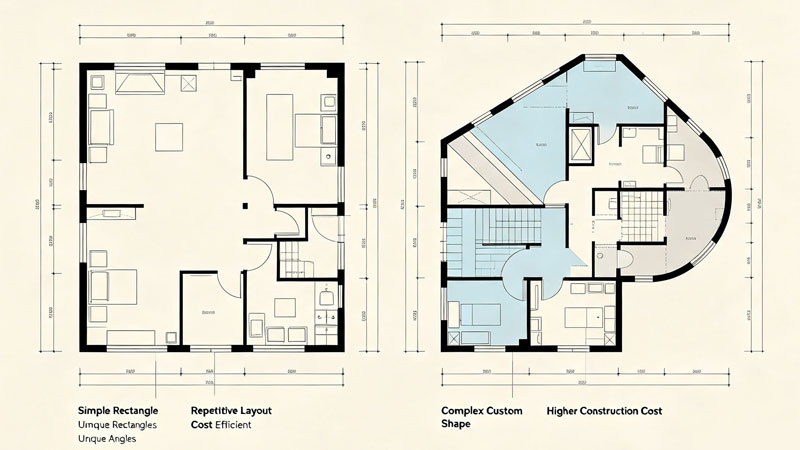
Rectangular and square layouts use less material and less labor than homes with lots of angles and jogs. Every corner adds framing time. An open floor plan also lets you build less total square footage while the home still feels larger.
One Story or Two? Do the Math First
Two-story homes spread your square footage over a smaller foundation and roof — both expensive line items. You’ll save on excavation and roofing materials, but add stairs and structural framing costs. For most lots under an acre in a pricier market, two stories still wins on total cost per square foot.
Stick to Standard Sizes
Custom window sizes, non-standard door widths, and odd ceiling heights all trigger custom fabrication. Standard sizes are stocked, cheaper, and faster to install. Save the customization for finishes you’ll actually notice day to day.
Pick Materials With a Payback, Not Just a Price Tag
Buying directly from suppliers cuts contractor markup, especially on lumber, siding, and fixtures bought in bulk. But the bigger win is thinking in payback period, not sticker price.
Insulated concrete forms cost more upfront than standard framing, but cut heating and cooling losses significantly over the life of the home. Run the math on your specific climate and utility rates before assuming any “green” upgrade pays for itself in a reasonable window.
Reclaimed materials can save money and add character, but check they meet current code and carry proper documentation — insurers sometimes flag undocumented reclaimed structural material during underwriting.
Know Where DIY Actually Saves You Money
You can safely paint, install flooring, assemble prefab cabinets, and handle basic landscaping yourself. That’s real, low-risk savings.
Plumbing, electrical, and HVAC are a different story. DIYing licensed trade work can void your builder’s warranty entirely, and some homeowners insurance policies exclude damage tied to unpermitted work. Ask your builder directly: which DIY tasks void the warranty, in writing, before you touch anything structural or mechanical.
licensed contractor requirements by state
Save Here, Splurge There: The Real Trade-Off Table
Not every dollar saved is equal, and not every splurge pays you back at resale.
| Room/Feature | Save On | Splurge On | Why It Matters for Resale |
|---|---|---|---|
| Kitchen | Cabinet hardware, backsplash tile | Layout, storage, countertop durability | Kitchens drive buyer decisions most |
| Bathroom | Light fixtures, mirrors | Waterproofing, tile quality | Water damage kills resale value fast |
| Flooring | Bedrooms, closets | High-traffic living areas | Wear shows fastest where feet go most |
| Insulation | Never | Always | Cheapest long-term ROI in the house |
| Landscaping | Initial plant size | Hardscaping, drainage | Poor drainage causes structural claims |
cost recouped by home improvement category
Insulation, windows, and doors are the one category worth overspending on every time. They’re expensive to fix after drywall goes up, and they directly affect your utility bills for as long as you own the home.
Watch for the Costs Nobody Budgets For
Change orders are the silent budget killer. Every mid-build change — moving an outlet, swapping a window size — costs more than if you’d specified it upfront. Lock your plan before breaking ground and resist the urge to “just tweak one thing.”
Build in a 10–15% contingency reserve. Weather delays, utility connection fees, and driveway or landscaping costs after move-in routinely get left out of first-draft budgets, then show up as surprise expenses in month two.
building a realistic construction budget checklist
FAQ: What Homeowners Actually Ask
What’s the cheapest way to build a house without sacrificing quality?
Choose a simple, existing floor plan, build with standard-sized materials, and stay disciplined about change orders. These three moves save more than any single product choice.
How much contingency should I budget when building a custom home?
Most builders recommend 10–15% of total build cost held in reserve for unplanned costs, weather delays, and material price shifts.
Does a smaller house always cost less overall?
Not necessarily. Price per square foot drops as size increases, so a very small home can cost more per square foot than a mid-sized one, even though the total is lower.
Can I act as my own general contractor to save money?
You can, but it shifts scheduling, permitting, and subcontractor coordination onto you. It saves the GC fee but adds real time and risk if you haven’t managed a build before.
Disclaimer: This article is for general informational purposes only and does not constitute financial, legal, or professional construction advice. Building costs, loan terms, and local codes vary by region and change over time. Consult a licensed contractor, loan officer, or attorney before making building or financing decisions.